What Size Rug Is Best for a Living Room? A Complete Sizing Guide
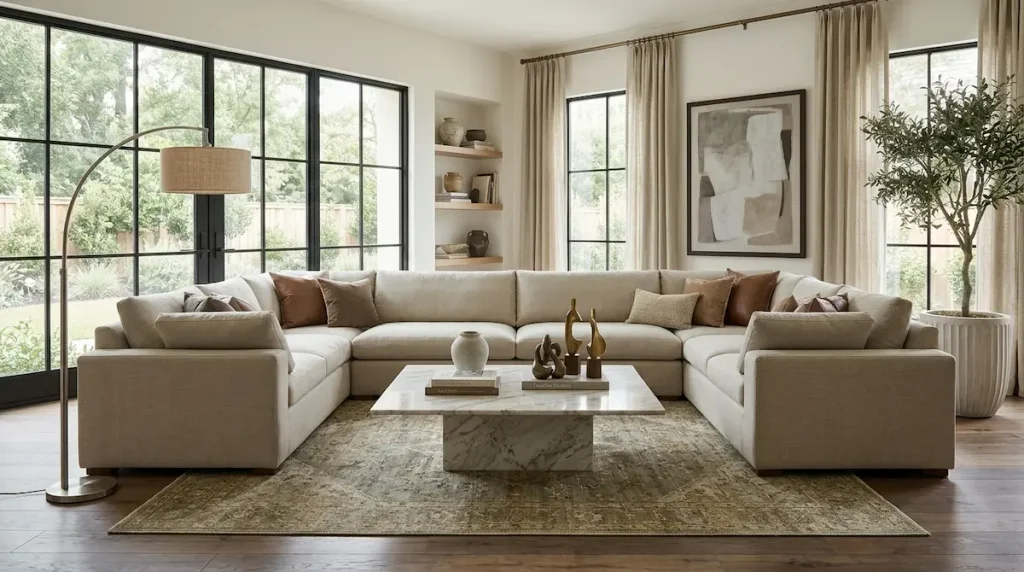
If you’re wondering what size rug is best for a living room, the right choice depends on your room dimensions, sofa size, and furniture arrangement.
Choosing the right rug size for your living room can make a big difference in how your space looks and feels. The right rug brings furniture together, adds warmth, and makes the room feel more balanced. However, a rug that is too small can make even a beautiful living room look unfinished.
So, what size rug for a living room is best? It depends on your room dimensions, sofa size, furniture layout, and how much floor space you want to leave visible.
An 8×10-foot rug is a useful starting point for many average-sized living rooms. A 9×12-foot rug may work better in a larger room or around a spacious sectional. Smaller rooms may need a 5×8 or 6×9-foot rug, depending on the layout.
In this guide, you will learn about standard rug sizes, furniture placement rules, measuring tips, and common mistakes to avoid. These simple guidelines will help you choose a rug that fits your space without making it feel crowded.
This post may contain affiliate links, which means I’ll receive a commission if you purchase through my links, at no extra cost to you. Please read full disclosure for more information
Table of Contents
Quick Answer: What Size Rug Is Best for a Living Room?
For most average-sized living rooms, an 8×10-foot rug is a good starting point. A 5×8 or 6×9-foot rug may work better in a smaller space, while a larger living room or sectional sofa may need a 9×12 or 10×14-foot rug. The right size depends on your furniture arrangement, sofa dimensions, and how much floor space you want to leave visible.
Understanding what size rug is best for a living room starts with your sofa dimensions and the amount of space available around your seating area.
Why Rug Size Matters More Than You Think
A living room rug does more than cover the floor. It helps define the seating area and connects different pieces of furniture.
When the rug is too small, the sofa and chairs can look disconnected. The room may also feel smaller because the rug does not create a clear visual boundary.
A properly sized rug helps your living room feel more organized. It can make the seating area look intentional and give the furniture a shared visual foundation.
Here are three reasons rug size matters:
- Better proportions: The rug should look balanced with the sofa and other furniture.
- A more connected layout: A well-placed rug helps the seating area feel like one complete space.
- Improved comfort: A rug adds softness underfoot and can make a living room feel warmer and more inviting.
You do not always need the biggest rug available. The goal is to choose a size that supports your furniture layout while leaving enough room for comfortable movement.
A well-balanced living room comes together through more than just furniture and rugs. Wall decor can also add personality and make the space feel complete. If you love a relaxed, cozy look, explore our guide to “11 Modern Boho Wall Decor Ideas for Living Room (Cozy & Stylish)”.
What Size Rug Is Best for a Living Room? Standard Sizes Explained
Let’s look at the most common living room rug sizes and how each one works with different room dimensions and furniture arrangements.
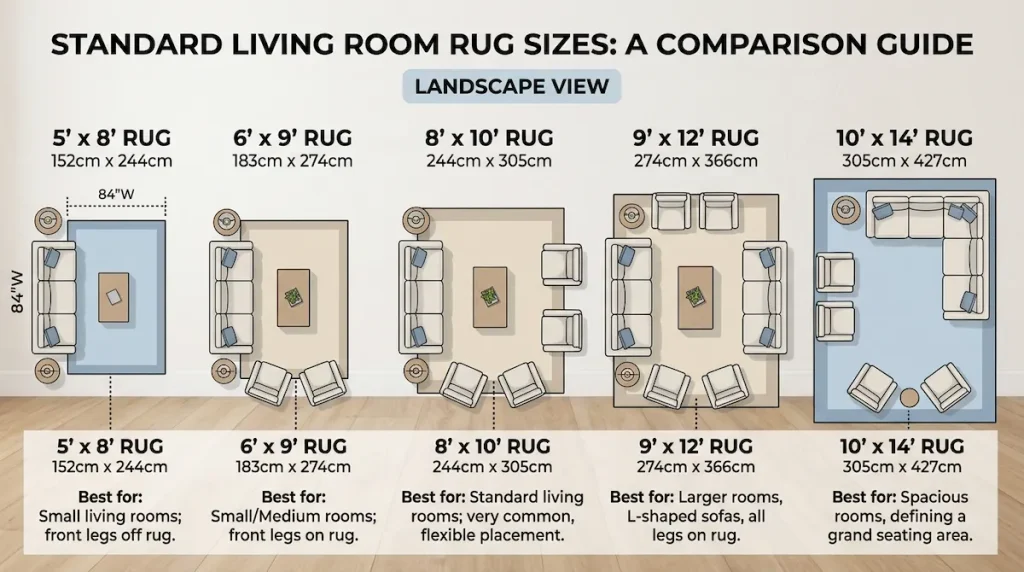
Living room rugs are available in several standard sizes. The best option depends on the size of your room and the amount of furniture you want to place on the rug.
The table below provides a general living room rug size guide. These are starting points rather than strict rules.
| Rug Size | Metric Size | Best For | Typical Furniture Placement |
| 5×8 ft | 152×244 cm | Small seating areas | Coffee table / floating |
| 6×9 ft | 183×274 cm | Small to medium rooms | Front legs |
| 8×10 ft | 244×305 cm | Average living rooms | Front legs |
| 9×12 ft | 274×366 cm | Large seating areas | All legs or front legs |
| 10×14 ft | 305×427 cm | Spacious / open-plan rooms | All legs |
Note: Placement suggestions are starting points; actual furniture dimensions matter.
Is a 5×8 Rug Big Enough for a Living Room?
A 5×8 rug can work well in a small living room or a compact seating area. It may fit beneath a coffee table with some space around it.
This size is often more suitable when the sofa and chairs are close together. However, it may look too small if you have a wide sofa and several large chairs.
Before choosing a 5×8 rug, mark its dimensions on the floor. This will help you see whether it feels balanced with your furniture.
When Should You Choose a 6×9 Rug?
A 6×9 rug can be a practical option for a small or medium-sized living room. It offers more coverage than a 5×8 rug without taking up as much floor space as an 8×10 rug.
It may work well beneath a coffee table and under the front legs of a sofa and nearby chairs.
Check the actual dimensions of your seating area before buying. Furniture width and spacing can make a noticeable difference.
Is an 8×10 Rug Big Enough for a Living Room?
An 8×10 rug is a popular choice for many average-sized living rooms. It gives you enough room to place a coffee table in the center while allowing the front legs of your sofa and chairs to rest on the rug. This can help bring the seating area together without covering too much of the floor.
However, an 8×10 rug may not provide enough coverage for a large sectional or a wide seating arrangement.
If your furniture feels crowded around the edges of the rug, consider testing a larger size with painter’s tape before making a decision.
When Is a 9×12 Rug Better?
A 9×12 rug can work well in a spacious living room, especially when the seating arrangement includes a sectional, multiple chairs, or a large coffee table.
It provides more room for furniture legs and helps define a larger seating area.
Before choosing this size, check the distance between the rug edges and the walls, doors, and walkways. A larger rug should support the layout rather than block comfortable movement.
Should You Choose a 10×14 Rug?
A 10×14 rug is usually more suitable for a large living room or an open-plan space. It can help define the living area without making the furniture arrangement feel disconnected.
In a smaller room, this size may cover too much of the floor or interfere with doors and walkways. Measure carefully before deciding.
How Much Wider Should a Rug Be Than a Sofa?
As a practical starting point, aim for the rug to extend about 6–12 inches beyond each side of the sofa when the room allows. For an 84-inch-wide sofa, that would mean a rug or seating arrangement with approximately 96–108 inches of width.
This is a guideline, not a fixed rule. The ideal proportions depend on the rug placement style, other furniture, and the shape of the room.
Rug Size Guide Based on Sofa Width
Your sofa’s width can help you narrow down your rug options. Here are a few examples to consider:
- 72-inch sofa: A 5×8 or 6×9 rug may work well, depending on the seating arrangement.
- 84-inch sofa: An 8×10 rug is a useful size to test, especially if you want the front legs on the rug.
- 96-inch sofa: An 8×10 or 9×12 rug may provide better coverage, depending on the surrounding furniture.
- Large sectional sofa: A 9×12 or larger rug may be worth considering to connect the entire seating area.
These are starting points rather than exact measurements. Always consider the width of your chairs, coffee table, and available floor space before choosing a rug.
The 3 Main Living Room Rug Placement Rules
Choosing the correct size is only part of the process. Where you place the rug also affects how your living room looks.
There are three common rug placement styles.
1. All Furniture Legs on the Rug
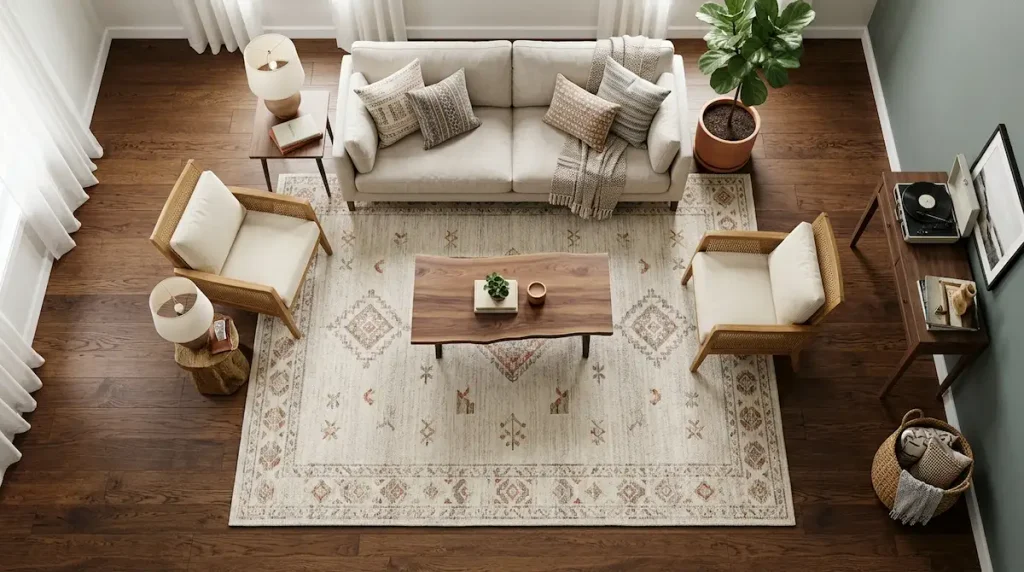
In this layout, the sofa, chairs, and other main seating pieces sit completely on the rug.
This arrangement creates a connected and grounded look. It can work particularly well in a large living room where the furniture is arranged around a central seating area.
A 9×12-foot or larger rug may be needed, but the correct size depends on the furniture dimensions and spacing.
To keep a large area rug securely in place and help prevent slipping, consider using a non-slip rug pad underneath.
Best for: Large living rooms, spacious seating arrangements, and open-plan homes.
2. Front Furniture Legs on the Rug
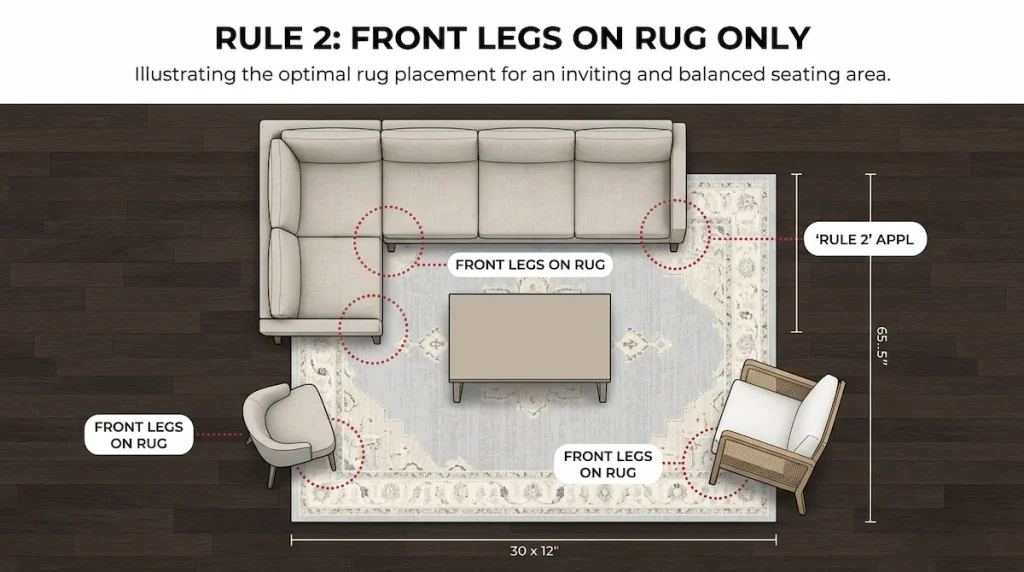
This is a flexible and popular arrangement for many living rooms.
The front legs of the sofa and chairs rest on the rug, while their back legs remain on the bare floor. The coffee table usually sits completely on the rug.
This layout connects the furniture visually without requiring the rug to cover the entire seating area.
An 8×10-foot rug may work well for some average-sized rooms, while a 6×9 or 9×12 rug may be more appropriate in other layouts.
If the rug corners tend to curl or move out of place, non-slip rug corner grippers can help keep the rug edges in position.
Best for: Small to medium living rooms, traditional seating areas, and rooms where you want a balanced look.
3. A Floating Rug in Front of the Furniture
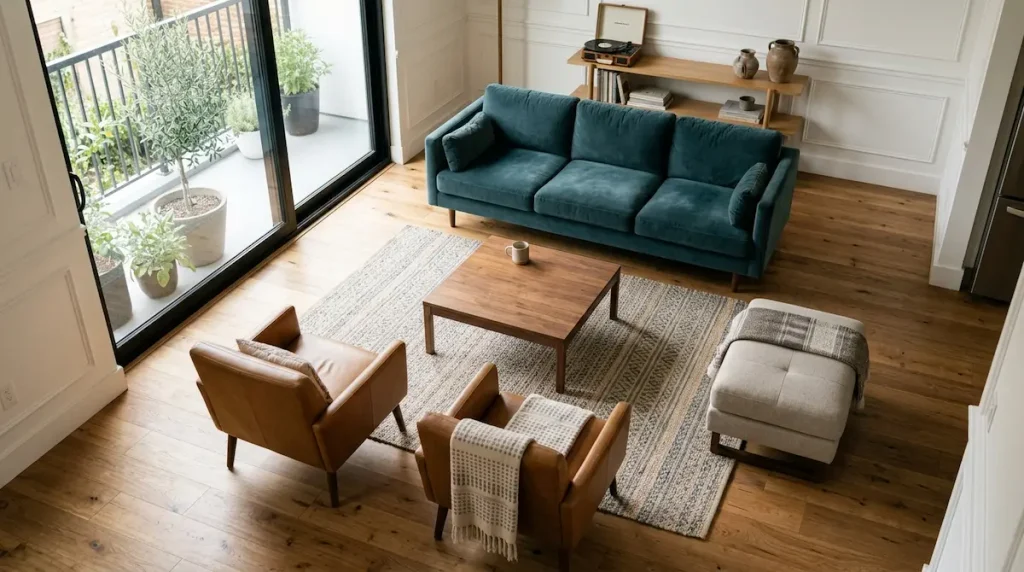
In this arrangement, the rug sits beneath the coffee table without reaching the legs of the sofa or chairs.
A smaller rug, such as a 5×8 or 6×9, may work in a compact seating area. However, the rug should still look proportionate to the coffee table and surrounding furniture.
A rug that is too small can appear like an isolated mat rather than part of the living room design.
Best for: Compact spaces, limited furniture arrangements, and rooms where keeping more floor visible is important.
How to Choose a Rug for Your Living Room Layout
Different furniture arrangements need different amounts of rug coverage. Here are some common examples..
For a Small Living Room
A smaller rug can help maintain an open feel, but avoid choosing one that is so small it disconnects the seating area.
Measure the sofa and coffee table first. Then check whether a 5×8 or 6×9 rug provides enough coverage for the arrangement.
Keep doors and walking paths clear, and avoid placing the rug where its edges create a tripping hazard.
For an L-Shaped Sofa or Sectional
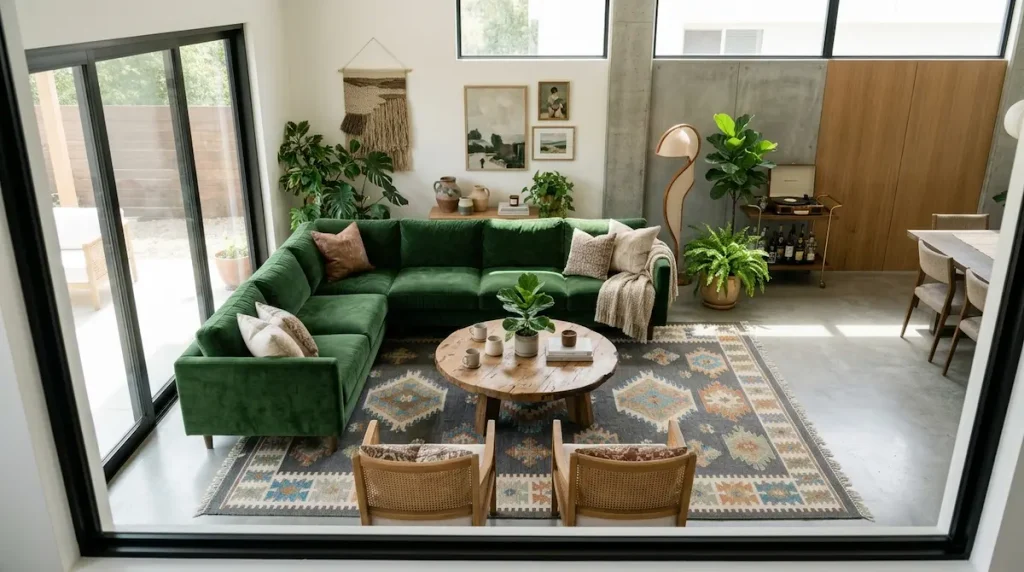
Sectional sofas often need a wider rug because they cover more floor space than a standard sofa.
An 8×10 or 9×12 rug may work, depending on the sectional’s dimensions and the amount of furniture around it.
Make sure the rug extends far enough to connect the main seating area. If you want all the sectional’s legs on the rug, you will usually need more coverage than if only the front legs sit on it.
Lighting also plays an important role in making a living room feel comfortable and inviting. If you’re planning to update your space, take a look at our guide to “20 Floor Lamps for Living Room Ideas to Try” for inspiration and practical lighting ideas.
For an Open-Plan Living Room
In an open-plan home, a rug can help separate the living room from the dining area or kitchen without using walls or dividers.
Choose a rug large enough to define the seating arrangement clearly. Keep the edges away from busy walkways where possible.
You can also use the rug to establish the living room’s visual boundary while leaving the surrounding floor visible.
A rug is just one part of creating a comfortable living room. If you’re looking for more ways to make your space feel warm and inviting without spending too much, explore our guide to “10 Cozy Living Room Ideas on a Budget”
How to Measure Your Living Room Before Buying a Rug
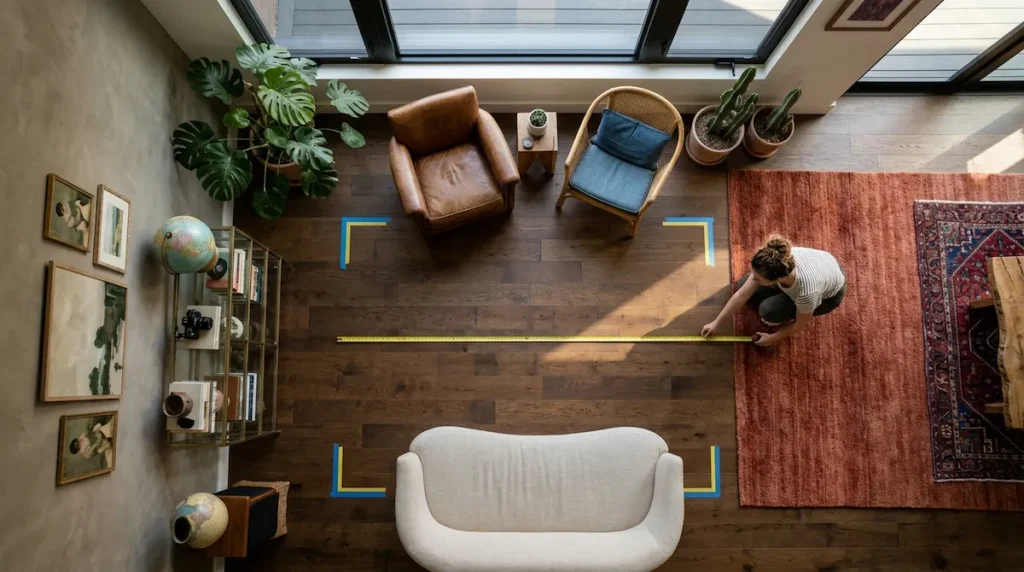
Measuring first is one of the easiest ways to avoid choosing the wrong rug size.
A measuring tape can make this process easier and help you check the exact dimensions before choosing a rug. You can check measuring tapes on Amazon to find one for your home.
Follow these simple steps:
Step 1: Measure your seating area.
Measure the width and depth of the area where your sofa, chairs, and coffee table sit. Focus on the furniture arrangement rather than the entire room alone.
Step 2: Decide how the furniture will sit on the rug.
Choose whether all furniture legs, only the front legs, or no furniture legs will rest on the rug.
Step 3: Use painter’s tape to mark the size.
Mark the outline of the rug on your floor. For example, measure and mark an 8×10-foot rectangle to see how much space it covers.
Step 4: Check doors and walkways.
Make sure the rug does not block door movement or make walking paths uncomfortable. Check the space around tables and chairs too.
Step 5: Compare another size.
If possible, mark a second option, such as a 9×12-foot rug. Comparing the outlines makes it easier to see which size looks better with your furniture.
Step 6: Check the manufacturer’s dimensions.
Rug sizes can vary slightly by brand and style. Always check the listed dimensions rather than relying on the size label alone.
For more inspiration on rug sizing and furniture placement, you can also explore West Elm’s living room rug guide. It offers helpful examples of different rug sizes and shows how to position a rug under your seating area.
Quick Reference Chart by Living Room Size
The following chart offers a general starting point for choosing a rug. Actual furniture dimensions and layout should guide your final decision.
| Approximate Room Dimensions | Rug Size to Test First |
| 10×12 feet | 5×8 or 6×9 feet |
| 12×15 feet | 8×10 feet |
| 14×18 feet | 9×12 feet |
| 16×20 feet or larger | 10×14 feet or another suitable size |
These examples are not strict matching rules. A room with a large sectional may need a larger rug than a room of the same size with a small sofa and one chair.
Also consider how much bare floor you want around the rug. Leaving visible floor can create a balanced look, but the ideal border depends on the room and furniture arrangement.
Common Living Room Rug Sizing Mistakes to Avoid
Even a beautiful rug can look out of place if the size or position is wrong. Watch out for these common mistakes:
- Choosing a rug that is too small: It may make the seating area look disconnected.
- Ignoring the sofa’s width: A narrow rug can look unbalanced beneath a wide sofa.
- Forgetting about chairs: Check whether the chairs will sit comfortably on or around the rug.
- Blocking walkways: Keep the rug away from door swings and busy walking paths.
- Measuring the room but not the furniture: The seating arrangement matters just as much as the room dimensions.
- Skipping the floor test: Marking the size with painter’s tape can help you avoid an unsuitable purchase.
- Ignoring the rug pad: A rug pad can affect the finished height and help reduce slipping. Check that it is suitable for your flooring and rug.
Taking a few minutes to plan the placement can make the final result look more intentional.
Frequently Asked Questions
1. What Is the Most Common Rug Size for a Living Room?
An 8×10-foot rug is a common starting point for many average-sized living rooms. However, smaller rooms may work better with a 5×8 or 6×9-foot rug, while larger seating arrangements may need a 9×12-foot rug or more.
2. Should a Rug Be Bigger Than the Sofa?
Yes, a living room rug generally looks more balanced when it extends beyond the sides of the sofa rather than ending at the same width. This helps connect the seating area and gives the furniture a more grounded look. However, the rug should also fit the room without blocking walkways or covering too much visible floor.
3. Is an 8×10 Rug Big Enough for a Living Room?
An 8×10 rug is a popular choice for many average-sized living rooms. It gives you enough room to place a coffee table in the center while allowing the front legs of your sofa and chairs to rest on the rug. This can help bring the seating area together without covering too much of the floor.
Looking for an area rug for your living room? Explore area rugs on Amazon to compare different sizes, colors, and styles.
4. How Far Should a Rug Extend Past the Sofa?
There is no single measurement that works for every room. Extending the rug approximately 6–12 inches beyond the sofa on each side is a useful starting point, but the surrounding furniture and walking space should guide the final choice.
5. Can a Rug Be Too Big for a Living Room?
Yes. A rug may be too large if it blocks doors, interferes with walkways, or covers nearly the entire floor when you want a visible border. Measure the room and test the rug outline before choosing a size.
6. Should All Furniture Legs Be on the Living Room Rug?
No. All legs on the rug is one option, but placing only the front legs on it is also a practical and attractive arrangement. In smaller spaces, the rug may sit only beneath the coffee table, provided the proportions still look balanced.
7. How Much Bare Floor Should Show Around a Living Room Rug?
The amount of visible floor depends on the room dimensions, furniture layout, and design preference. Leaving a border of bare floor can help define the rug, but there is no universal distance that every living room must follow.
Final Thoughts
Choosing what size rug is best for a living room does not have to be complicated. Start by measuring your seating area, considering your sofa and chairs, and deciding how you want the furniture to sit on the rug.
An 8×10-foot rug is a useful starting point for many average-sized living rooms. A 5×8 or 6×9-foot rug may suit a smaller seating area, while a 9×12 or 10×14-foot rug may work better in a spacious room.
Most importantly, test the dimensions before making your final choice. Mark the rug outline on your floor to compare sizes, check walking space, and see how well it fits your furniture.
With the right rug size and placement, you can create a living room that feels more inviting, comfortable, and beautifully put together.